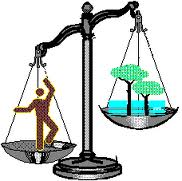
Reflective Writing I came up with the idea to calculate carrying capacity during our lecture of logistical growth functions. I kept thinking to myself throughout the lecture, "Ok, so I see how the world is, but what about each country? Who is having the most significant impact on global growth rates?" Then I thought about each country's land mass and thought, I wonder how many countries have already filled their ecological carrying capacity. So, when I started researching carrying capacities, I was alarmed that I could only find 2 countries that had some sort of figure regarding their carrying capacity. This seems to be a very important aspect to human survival! So, this set up a VERY interesting challenge for me, now on top of all the other research I needed to do, I would also need to discover a way to estimate carrying capacity. This was an aggravating process to say the least. I probably tried three or four formulas before finding two that could be used together to work for this project. Now that all is said and done, I am very proud of my project. This is entering new territory for me both mathematically and philosophically. It is also empowering to know that I can create and execute a project that using math as the foundational evidence. I am very glad that this class is a pre-requisite to Methods of Research, as now I am confident that I am ready to conquer that next class! | MATH 1030 -- Quantitative Reasoning Top 20 Country Populations and Carrying Capacity The notion that the earth is logistically growing in population and the earth’s carrying capacity is nearly filled is an intriguing topic especially when considering the human experience on the 24 hour clock. The 24 hour clock explains that human population has grown exponentially with the vast majority of our population growing in the last 3 to 4 minutes (approximately the last 400 years) (Walton and Rockoff). Upon determining the project that I would fulfill in Math 1030 I thought about this concept and pondered how this reflects on individual countries. So, I set out to determine of the top 20 most populated countries, how many of those have hit carrying capacity, and if they haven’t already hit carrying capacity how many years will it take for them to reach their carrying capacity? Within this paper I will describe how I derived my project, what formulas and strategies I used, explain my results, and the discuss the potential implications that are implied in the results. The first thing that needed to be determined is what statistics and facts needed to be compiled. So, I gathered information from the CIA World Factbook including: The top 20 most populated countries, their respective population as of 2010, and their individual growth rate estimates (chart 1) This led me to the next step of researching carrying capacity estimates. It must be understood that the estimate that I found time and time again is not concretely developed, rather it is based off of ecological educated guesses, though the estimate is widely regarded as valid. According to populationmatters.org the optimum carrying capacity is 1.8 hectares of land per person (2011). The conversion of 1.8 hectares to kilometers2 is .018. At this point I began to enter all of my collected data into a spread sheet. Upon looking at the information I had, I realized that the best way for me to estimate carrying capacity reflective to each country would be to calculate how much land each country had at their disposal. I returned to the CIA World Factbook and compiled each country’s land area. Realizing that the reality of the world is that not all soil is created equal I also gathered all of the arable land figures, which happened to be recorded as percentages of total land. I multiplied total land by the arable land percentages in order to have the arable land area.
Finally I had each individual country, their respective population, the individual growth rates, land area, and arable land area. Now I needed to calculate carrying capacity in relation to area. I realized that it would be best to estimate both total land capacity and arable land capacity in order to be able to compare the difference between the two numbers. I also constructed two scenarios, the more conservative of these scenarios said that only arable land could sustain life and the more dynamic scenario said that arable land could sustain crops but all other purposes (energy production, building construction, animal life, etc.) could exist on non-arable land (high and low estimates) (see chart 1). I simply used the formula:
The next step was to compare both computations of carrying capacity estimates to current populations. To my astonishment all of the top 20 most populated countries have already hit arable land carrying capacity and 15 countries had already hit total land carrying capacity. The five countries that haven’t hit total land carrying capacity are the United States of America, Brazil, Russia, Iran, and Democratic Republic of Congo. So, I set out to calculate when exactly each of these five countries would hit their carrying capacities. In order to do this I used the exponential growth function: So with the estimated carrying capacity and current growth rate the year that the remaining five countries that have not hit carrying capacity are as follows: USA: 2069, Brazil: 2086, Russia: NEVER, Iran: 2026, and Democratic Republic of Congo: 2029. Because Russia has yet to hit their carrying capacity and their growth rate is -0.47% this means that they are actually losing population from year to year, and at current growth rates they will never hit their population carrying capacity. The computations for the United States of America are as follows: Upon concluding that 15 of the 20 countries have hit capacity, the question of whether or not they are currently experiencing Overshoot and Collapse phenomenon begs to be asked Limitations
It must be fully understood that there are several limitations within this paper. Firstly, the carrying capacity figures that I have included in my calculations are estimates at best. Calculating carrying capacities is a large undertaking, requiring the factoring of several different aspects, of which most are hard to pin down (such as developing agricultural technologies). So, this translates that the figures quoted within this paper are a rough estimate, and as lifestyles, technology, and cultures develop and advance the base number of 1.8 hectares needed per person can change dramatically. Secondly, for time and space limitations within this paper it was imperative that I calculated the data as if the current snap shot of our world’s progression would stay relatively stable. This means that exponential functioning of population growth was not fully incorporated into the calculations. Finally, this doesn’t consider major catastrophes that may occur (such as natural disaster or global wars) that could significantly impact the designated populations. Disasters, wars, and famines have the capability of wiping out huge amounts of people in very short periods of time; consider the black plague, World War II, or even the tsunami of 2004 in Indonesia.
Even though there are some limitations to this project it is still interesting to see how quickly our world population is growing. It is also interesting to consider how quickly impoverished third world countries are growing, especially considering how hard it is for the people within these countries simply to survive. When considering the Middle East and African countries it is interesting that their overshoot is so significant. The notion of what goes up must come down is quite disconcerting in regard to the countries that are significantly over their carrying capacities, and it ought to be of special concern how exactly the collapse aspect of the phenomenon will surface for these countries.
About optimum populations. n.d. 17 April 2011 http://populationmatters.org/in-depth/frequently-asked-questions/optimum-populations/.
Bennet, Jeffrey and William Briggs. "Using & Understanding Mathematics A Quantitative Reasoning Approach." Boston: Pearson Education, Inc., 2011. 494.
CIA World Factbook. 2011. 19 April 2011 https://www.cia.gov/library/publications/the-world-factbook/rankorder/2119rank.html?countryName=China&countryCode=ch®ionCode=eas&rank=1#ch.
Search Data 360. n.d. 20 April 2011 http://www.data360.org/search.aspx?ScriptManager1_HiddenField=%3B%3BAjaxControlToolkit%2C+Version%3D3.0.20229.20843%2C+Culture%3Dneutral%2C+PublicKeyToken%3D28f01b0e84b6d53e%3Aen-US%3A3b7d1b28-161f-426a-ab77-b345f2c428f5%3Ae2e86ef9%3A1df13a87%3Aee0a475d%3.
Walton, Gary M. and Hugh Rockoff. "History of the American Economy." Walton, Gary M. and Hugh Rockoff. History of the American Economy. Mason: South-Western, 2005. 16. |


Reflection Throughout the semester I have had to complete several papers and collaborate with a group in order to develop a comprehensive community writing project. It was important to establish my topic in the beginning of the semester because I would need to write several different styles of papers under one umbrella topic. If the topic was too narrow, the writing process would be unduly challenging, if the topic was too broad detailed information would be too challenging to convey. Once I chose my topic of illegal drugs, I was ready to begin enhancing and developing my writing. The greater purpose of writing the papers for this class was to develop my writing skills in a number of ways. One very important aspect of development I have made in regards to my writing is molding my strategies for argument. I have learned how to place my voice into an argument paper without over embellishing and pushing the paper from persuasion into opinion. The next important skill that I have built is adapting the style of my written pieces respective to the situation in which I am addressing. For example, when writing a persuasion paper it is important to show the reader why they should be more understanding to one side of an issue versus the other, as opposed to a report, where there shouldn’t be any deliberate persuasion, the facts must speak for themselves. As my group collaborated on the topic of illegal drugs, we discussed why this topic was important to each of us. As we began to understand each other’s views and motivations we were able to mold each and every one of our topics into a concept that we could all adhere to, which was: the current drug laws are ill formed and not benefiting greater society as they currently sit. The first paper that I had to write was the report. I decided that the best way to convey the point that I was trying to make was to detail how the drug laws have developed over time. This would allow the reader a back story to the corruption and rash actions surrounding illegal drugs. The second paper I wrote was centered on position/persuasion. With this paper I decided that I would emphasize that since the laws that we currently have are not working, it is important the American citizens educate themselves and support law reform. The third paper that I wrote was a profile about a man who has suffered greatly because his religion (Rastafarian) is not recognized as having the legal right to use drugs in ceremony. This paper was developed to show that even though this man has a constitutional right to religion, he cannot practice his religion in its proper form … legally. Finally, the final paper that I was involved in was a group collaborated flyer. The purpose of the flyer was to show how all of the information that we had just detailed in our papers could be used in a public forum. The flyer detailed information about a faux town hall meeting to discuss current drug laws and promote the understanding of how and why current laws are damaging to citizens. The first three papers were written independently, however it took group effort in order to conceive the ideas, edit the drafts, and assist with any revisions. Writing in a group provided a backboard to bounce ideas off of. I was able to gain confidence in my ideas and confirm the process and ideas of the other group members. One major perk of working in a group was that instead of having just one person doing research on a topic there were four. This meant that as we brought issues and challenges to the table, other group members had the knowledge in order to refer the writer to various sources and ideas. This was the most significant peer help I received. They were able to make notes in my paper as to where I could find further information with a website or a book, or help me clarify information that I had included in my work. Aside from technical aspects in writing, most of the comments left in my peer reviews were suggestions, and many times I was able to use those suggestions in order to clarify my paper. I was thrilled to be able to do peer reviews. I love reading other people’s work, and peer reviews allowed me to be able to read and comment on their work. I was also very happy to help one girl in my group whose native language wasn’t English. I was able to help clarify and address many of the quirky aspects of the written English language (for example how to change tenses or when to use there, their, and they’re). Selfishly, I was able to take style and formatting ideas away from other people’s papers as well. This allowed me to be more creative in my writing. One thing that I learned in this class was how to properly cite, in-text and at the end of the document. This was the bulk of the revisions I had to make; I learned that MLA requires page numbers in text and that every line after the first must be indented on the works cited page. Another edit I made in my paper due to peer reviews was explaining the purpose of the pictures I included in my paper. I was very vague about their purpose and had to learn how to quickly explain their importance. The final edits I made to my paper were in relation to the flow of the subject context. I had a nasty habit of not fully explaining a topic within the paper before moving on to the next. In about a half a dozen places, I had to expand and fully explain the topic in order to be clear to the reader what I was attempting to convey. Upon compiling my final portfolio I had to choose three of my four written pieces to include. Being that the flyer piece was non-admissible, it made my choice very simple. I very intently developed my topics so that they would flow together and complement each other. The report offers a baseline of information, the persuasion/position paper offers a new line of thought on the topic, and the profile backs up my report and persuasion/position by showing human proof that all of the claims that I have made are substantiated. By planning ahead from the beginning I was able to transition from one paper to the next with little challenge. This made compiling the final portfolio very easy as well. I am very pleased with my project and I hope to carry the skills that I have learned on with me in other papers and reports that I will write in the future. | ENGL 2010 -- Intermediate Writing Report Drug Bans in the United States There are certain substances that we, citizens in the United States, are not allowed to use, possess, or sell. This is a common understanding. The question that arises is: why are certain substances illegal? The drug ban in the United States has a long history. Over the past 100 years, more and more psychoactive substances have become illegal. The laws that control the legality of substances have been changed to reflect the challenges of the times. The purpose of this report is to examine why drugs have become illegal, and what the United States government does to enforce the established drug laws. In the early years of our country’s existence, many substances were grown, cultivated, and used openly. Our founding fathers, George Washington and Thomas Jefferson, owned cannabis plantations (Worobec). There was limited social stigma attached to substance use, most of the criticism voiced during the early years of the country’s existence were from moral purists, such as puritan leaders and pious. As our society began to evolve, many aspects of general life began to change, the use of drugs and other substances began to be perceived in a critical light. Opium Use and the Birth of Awareness In the 19th century opium was a widely used drug. It had spawned the development of many medicinal drugs, such as codeine and morphine, and many people enjoyed using it as a way to relax. The development and use of morphine in the medical field transformed procedures from a cruel reality of life to genuinely necessary practice. As the compounds of opium were isolated and refined, even more potent substances introduced themselves into our society. The most significant of these was heroin. As opiates gained adherence and were marketed as a variety of cure-alls, the concern of dependence and abuse grew. In the late 1800’s Chinese immigrants began to populate the western seaboard, and they brought the recreation of opium smoking with them. As the United States government grew weary of the abundant droves of Chinese immigrants, they began to pass restrictions on immigration, export/imports, and small businesses that were established by this minority group. Thus, in 1875, the first laws were created in California to ban opium use in opium dens, thereby addressing the growing concern of opium dependence and stifling the entrepreneurial efforts of the newly migrated Chinese people (druglibrary.org). This spawned the beginning of public awareness to substance abuse. Drug Legislation With growing support and pressure from the public, government officials began to feel increasing pressures to create laws that would help govern the potential drug epidemic. This was also exacerbated by economic pressures and concern over public moral standards. The first federal law to pass was the Pure Food and Drug Act in 1906. There was growing concern over the additives that were in medications and foods. Before the Pure Food and Drug Act passed, there was no way to know exactly what were in the products people were consuming, except for what the manufacturer voluntarily disclosed. As knowledge of additives to consumer products, the public became increasingly weary of the rampant use of psychoactive drugs in everyday life. Moral crusaders began to campaign about the evils substances can cause. Slogans, ad campaigns, and public rhetoric were becoming common place in the early 20th century. As public opinion began to conform to these campaign tactics, there was an outcry to put an end to the abominable use of opium. In 1909 the Smoking Opium Exclusion Act was passed, and opium was officially banned by the federal government (Gahlinger 34). Congressman Francis Barton Harrison, an outspoken objector to the use of narcotics, trail blazed the legislation involved in passing the Harrison Narcotic Act of 1915. This act was originally passed as a method of tracking prescriptions in an effort to prevent addiction to specific narcotics, but quickly became a tool for banning the illicit substances (Gahlinger, 35). When the law passed, opioids and cocaine were among the drugs to be heavily regulated, cannabis, however, was removed from the bill to ensure that the law would pass with limited political resistance. Five years later, a change in the social fabric occurred 1920: Prohibition. Prohibition made it illegal to manufacture, distribute, a consume alcohol. Prohibition aided in changing the way people viewed the controls over mind altering substances, the spirit of temperance was the fueling force behind the law change. However, the majority of the public resisted the restrictions placed on alcohol, and, as a result, the demand for alcohol was fierce. Prohibition laid the foundation for organized drug rings. The mafia jumped at the chance to be able to make a profit on providing the public with the substance. Though the mafia gained its momentum during this time, they were not the only ones producing and distributing alcohol. The underground of “moonshiners” and “rumrunners” were the majority responsible for the abundant supply to the public. Many small time family sills popped up through the American front, numerous people certified themselves as religious leaders so they could pass “sacramental wine”, and even physicians would prescribe alcohol to their patients (Fish 51). Alas, Prohibition was short lived, and in 1933 the Prohibition laws were appealed (drug-rehabs.org). The Great Depression brought out the nasty side of the United States Populous. Many people detested the immigration of Mexicans and blamed them for the unwelcomed labor pool. Because Mexican’s were associated with marijuana, a new tax called the Marihuana Tax Act was passed as a strategy to pull revenues from this minority pool of workers. Commissioner Harry Anslinger sensationalized the dangers of reefer madness purporting that marijuana was the Devil’s weed. With the help of William Randolph Hearst, a major paper supplier in direct competition with the hemp industry, wide spread publications of the negative allegations that cannabis was a dangerous drug took hold of the American public (Gahlinger 57). The mid-20th century brought about a lot of legislative changes. The post-war era was littered with amphetamine and hallucinogen abuse. These two types of drugs were held responsible for the chaos and distress of the 1960’s. With the hippie movement in full swing, the image of irresponsibility and mayhem encompassed the imaginations of the average American citizen. In 1965 the government was overwhelmingly supported in legislation that would help prevent and control the abuse of drugs and other substances (Drug Abuse Control Amendments). 1970 ushered in the Comprehensive Drug Abuse Prevention and Control Act. These laws connected all of the previous drug laws together in a network that would allow enforcement practices to utilize this one act versus dozens of separate laws. Finally, in 1973, the federal government created the Drug Enforcement Agency (DEA). The DEA transformed the way the laws, enforcement, and monitoring of drugs was organized (justice.gov). Conclusion Through the last 100 years, many factors have contributed to the drug bans that our society lives with on a daily basis. Some of the laws that had been passed were quickly overturned, such as Prohibition. However, other laws have held strong, largely because of the support from American citizens, such as the Harrison Narcotic Act. With every new law that is passed that restricts the use of illicit substances, the government must create some method to enforce the new laws. This has created a storm of controversy, as people have begun to wonder where human rights end and protection begins. Most significantly, everyone must understand where our current laws stem from, and why they were initially passed. Works Cited “Devils_Harvest2.” 1942. Photograph. Portland NORML. Web. 27 Jan. 2011. Fish, Jefferson M. Drugs and Society: U.S. Public Policy. Lanham, MD: Rowman & Littlefield, 2006. 51. Gahlinger, Paul M. "Chapter 3: The War on Drugs." Illegal Drugs: a Complete Guide to Their History, Chemistry, Use and Abuse. New York: Plume, 2004. 56-86. "History Of Drugs - History Of Drug Abuse - History Of Drug Addiction." Drug Rehab Alcohol Drug Rehabilitation Addiction Treatment Programs. 2002. Web. <http://www.drug-rehabs.org/history-of-drugs-c.htm>. Opinions, Adam Worobec Gauntlet. "The Gauntlet® Opinions - The Case for Hemp: Good to Wear, Bad to Smoke." The Gauntlet® - The University of Calgary's Student Newspaper. 27 Jan. 2011. Web. http://thegauntlet.ca/story/15206. “OpiumSmokingWest5.” 1920. Photograph. Opium Museum. Web. 27 Jan. 2011. United States of America. Drug Enforcement Administration. Welcome to the United States Department of Justice. Web. 06 Feb. 2011. http://www.justice.gov/dea/history.htm. "When and Why Were the Opiates and Cocaine Outlawed?" DRCNet Online Library of Drug Policy. Web. 06 Feb. 2011. http://www.druglibrary.org/Schaffer/library/opiates_outlawed.htm Position/Persuasion Reformation of the Deterrence of Drug Abuse For three decades our country has been at war, “The War on Drugs.” In the early 20th century many government agencies and new legislations have developed. The public demanded that there be some controls placed on psychoactive substances because there was a fear that these drugs may somehow destroy our country. Propaganda against drugs began to spread like wildfire, creating fear and hysteria throughout the United States. Most of this propaganda was exaggerated at best and wholly falsified at worst. The American public has been asked to support the banning and criminalization of many different substances, and the only evidence they were provided with were the corrupted and one sided agendas of biased parties. We continue to see the government and other anti-drug supporters use these tactics, and we continue to follow this ignorant path of creating legislation to ban things that we don’t fully understand. Unfortunately, we have now come to a point where our government has put the power into the hands of just one agency to determine the legality of all chemicals and substances. With the aid of this single handed and narrow sighted power, the drug abuse problem in our country has only grown worse. The strategies that we are currently using to deter and remove drugs from our society are not working. As a matter of fact, there is still drug related violence now just as there has been in decades past. Most disturbing is that more people are being sentenced to spend large portions of their lives in jails and prisons for drug related offenses, some of these offenses are as small as simply being in possession of a marijuana cigarette. Because our current laws and policies aren’t working, we ought to openly educate our citizens and adapt our current methods of addressing the use and abuse of psychoactive drugs in our society so that all people can benefit from them. Anti-Drug Law Supporters The reasoning behind the country’s perpetual war against drugs is fervently defended by the Drug Enforcement Administration (DEA). A publication was released that was designed to address and detail all 10 major reasons to continue the drug war. They claim that for 10 reasons (figure 1, fact 1) our country must continue to fight the war against drugs. The most significant arguments that the DEA proposes is that our country has been fighting the war against drugs for so long that it would be frivolous to stop the efforts now. They claim that there are 9.5 million less people that use drugs now as compared to the late 1970s. They also claim that more teens state that their school is drug-free and the 2001-2002 PRIDE survey has shown that “student drug use has reached the lowest level in nine years.” This shows that educating children about the dangers related to drugs and drug abuse is aiding in use reduction, and additionally, attaching a negative social stigma to drug use. Considerably, the DEA claims, 95% of the American population does not use illegal drugs of any kind, and because of this, we should not give up on the war against drugs (justice.gov). Another point that anti-drug proponents make is that the drug laws that are in place today were influenced and supported by the United States public. Public support has fueled the war against drugs and continues to propel its strength and growth. The first laws enacted in the late 1800’s banning the use of opium and all of the laws enacted after that point were created, in large part, because of public pressure to reduce harm by removing the substances from society (Gahlinger 57). Further, anti-drug law supporters point out that in the late 19th century and through the 20th century drug laws were too disconnected. They hail the Drug Act of 1970 as a collaborative tool that has been used to place all of the various laws in one location. They claim that there was a significant need to establish the drug act to create an effective collaboration of laws, so that amended legislation would be easier to add and remove to the act. So the resolution for this problem was to create the 1970’s drug act in an effort to control and manage current and future drug laws. Finally, in the DEA statement (figure 1, fact 10) most non-violent users get treatment, not just jail time, they explain, “Only 5% of inmates in federal prison on drug charges are incarcerated for drug possession (justice.gov).” Though, in state prisons, on average, 27% of drug offenders are jailed for simple possession. There is also strong evidence that shows most first time drug offenders don’t go to prison, and many drug offenses are reduced down to simple possession. Supporting the Decriminalization of Drugs The major argument from the critics in regards to the war against drugs is that we have tried our current drug tactics since 1972, and have been punishing drug offenses since 1957, and the efforts haven’t been effective. The progress of the drug war simply isn’t very significant. Our country needs to modify current drug laws and exercise new strategies. People seek out mind altering substances, and this leads to the use of carcinogens (i.e. huffing glue, paint, etc.). It is easy to argue that if we haven’t seen results from the tried and true efforts surrounding the war against drugs, then we need to try a different strategy in order to find a more successful method of handling substance abuse issues. The next major argument made is that public support for current drug laws has been based on fallacious claims and hysteria. The first anti-drug law passed in our country was in 1875 (Gahlinger 59). San Francisco passed a law that banned the use of opium in opium dens as a way to discriminate against the overwhelming use of the substance by Chinese immigrants and to discourage the growth of Chinese businesses. With laws like the one in San Francisco gaining public adherence, the Harrison Narcotic Act of 1915 gained support from conservative Protestants who viewed drugs morally corrupt, on a religious level. The fact that laws have been passed with the influence of racism and are continued to be supported out of ignorance is blatant ignorance on behalf of the American people, and deeply corrupt of the government officials. In 1937 the Marihuana Tax Act gained public support largely from the propaganda that William Randolph Hearst funded (Gahlinger 61). There was a large movement at the time to create a malevolent image of marijuana users. This was for two reasons: 1. Mexican immigrants were major importers of the substance, and the minority was not well respected by the white majority. 2. Hearst’s wood based paper manufacturing company couldn’t compete with low cost cannabis based paper manufacturers. Hearst needed to snuff out his competition, and the best strategy to do this was to make cannabis completely illegal. This again calls into question how “moral” these laws of “morality” really are when our country has corrupt corporate America calling the shots from their pockets, this seems to substantiate the notion that the laws we are required to follow sincerely are not developed for our best interest. The 1960’s brought about the hippie movement which was based on freedom and emotions of love, but established a stereotype of “dirty drug users.” This exacerbated the negative stereotypes surrounding psychoactive substances and their users. Finally, in 1963, Timothy Leary took the limelight by promoting and advocating for the use of “psychedelic” drugs. This movement pushed conservatives over the edge, and concreted the idea that drugs must be forcefully removed from our society. To current day the stereotypes that developed during this period hold strong, thus creating an environment of distain for those who are suffering and a mentality of compliance for substandard social status for those using drugs illegally. In respect to the public understanding of how psychoactive substances work in the brain and the physiological effect on the body, most people don’t have a comprehensive understanding of how these substances work. How can our country expect to make logical and practical laws regarding drugs if individuals don’t know what drugs do? Most shockingly, research is very hard to perform because of the stringent laws on drugs. Schedule I narcotics, such as heroin and LSD, are regulated so strictly that even laboratory research permits are very hard to obtain, thus, gaining information and understanding about these substances is very limited (Gahlinger, 76-79). There are three laws that have been passed in recent years that limit the ability to alter current drug laws and place primary control over drug enforcement into the hands of one government agency, the DEA. The first of these laws was the Comprehensive Drug Abuse Prevention & Control Act of 1970. This act combined all existing drug laws, which made the existing laws much easier to access and understand, but also is the controlling authority of any and all drug laws that our entire country must follow (superseding state laws). The second of the laws was the Comprehensive Crime Control Act of 1984. This act revolutionized how drug laws are created and passed in our country. By this act, the DEA singlehandedly has the power to temporarily place a substance into Schedule I, sidestepping the normal legal process. The third of the laws was the Anti-Drug Abuse Act of 1986. This law reintroduced mandatory minimum sentences for drug law violations, specifically, 5 to 40 years for possession of cocaine. This law also removed the option for parole on drug convictions. Unfortunately, these laws happen to be disproportionately disserving to minorities, crack cocaine, for example, is most widely used by African Americans (drugpolicy.org). Because these laws are not resulting as a benefit to society as a whole, they need to be reconfigured with the above stated problems in mind. Finally, one must consider the DEA’s point that only 5% of convicted drug offenders are jailed for simple possession. 5% of 2.4 million people is still 121 thousand people in our jail systems for simple possession (drugwarfacts.org)! Another point that must be considered in relation to jail and prison sentences related to drugs is how many people have been prosecuted and locked up because they are participating in the black market (manufacturing, distribution, and trafficking). These are all crimes that are directly related to the illegality of psychoactive substances. Our country is sentencing criminals at a faster rate than any other country in the world, 50.7% of our current prison population is there because of drug law violations (drugwarfacts.org). Proposal Our current laws and punishments are not effectively working as deterrents. The public has not been fairly or effectively educated as to how drugs affect humans physically. We should not allow one agency to have primary control over the creation and enforcement of drug laws that effect the entire population. Prison is not an effective deterrent, and rehabilitation options need to be weighed into the complex equation of how to handle substance abuse. It is imperative that researchers complete intensive research so that the American public has founded unbiased evidence to base our laws on. It is also important that drug addicts stop being treated like criminals, and begin being treated like patients with an illness, as that is what is really afflicting them. By making educated choices and treating problems with treatments, we will be able to find a more cohesive method in solving our drug abuse epidemic. Control and regulation is one of our county’s best tools, it has worked before, after the prohibition of alcohol failed, and it could work again with the failure of illicit drug laws. Human beings have a natural instinct to avoid harm, but human beings are also naturally inquisitive. Most people don’t intentionally harm themselves, so education can allow everyone the opportunity to understand what the difference between use and abuse of psychoactive substances means. This will allow our citizens to have the proper tools necessary to practice moderation. Even if a select few do abuse their right to use drugs, we already have an effective system in place to manage those perpetrators. If someone breaks the law while under the influence of a controlled substance we would be able to use the same laws that are currently used with alcohol issues. For example, if someone drives under the influence, their license is revoked and they are required to seek substance abuse treatments. Another example, if someone smokes in a public building, they are fined. People don’t need protection from themselves; they have the natural instincts necessary to care for themselves. Our country ought to preserve our right to choose! We need to implement laws that will help regulate and control drugs, not ban and punish users. But most importantly, we need to use education as our most effective tool. In the words of the great Sir Francis Bacon, “Knowledge is Power!” Works Cited "Bureau of Justice Statistics Drug Arrests by Age." Bureau of Justice Statistics (BJS). Web. 12 Mar. 2011. http://bjs.ojp.usdoj.gov/content/glance/drug.cfm. Community Service Media, Inc. - Land O Lakes, FL. Web. 18 Feb. 2011. http://www.communityservicemedia.com/anti_drug.php. Gahlinger, Paul M. "Chapter 3: The War on Drugs." Illegal Drugs: a Complete Guide to Their History, Chemistry, Use and Abuse. New York: Plume, 2004. 56-86. "Prisons, Jails & Probation - Overview | Drug War Facts." Welcome | Drug War Facts. Web. 18 Mar. 2011. http://www.drugwarfacts.org/cms/Prisons_and_Jails. "Race and the Drug War." Drug Policy Alliance: Alternatives to Marijuana Prohibition and the Drug War. Web. 16 Feb. 2011. http://www.drugpolicy.org/communities/race/. Rolles, S., “An alternative to the war on drugs.” British Medical Journal. BMJ, 2010. 341: c3360 "Speaking Out Against Drug Legalization." Welcome to the United States Department of Justice. Web. 20 Feb. 2011. <http://www.justice.gov/dea/demand/speakout/index.html>. Profile In the last decade Robert Edward Forchion, notoriously known as Weedman, has been an advocate for marijuana legalization. He has run for public office, orchestrated marijuana deliveries, and has outspokenly appealed to the American public for adherence related to the legalization of marijuana. His primary purpose for advocating marijuana legalization is because of his religious beliefs; Forchion is a member of the Jamaican religion, Rastafarian. Forchion has faced a lot of resistance and opposition related to his pro-legalization position, and it has all been in the name of freedom of religion and medicinal use of marijuana. The Rastafarian religion has no formal organization and is considered a "messianic religio-political movement." This religion promotes lifestyle adherence as opposed to ritualistic Protestant based traditions that the majority of American’s follow. The most important points of the Rastafarian lifestyle include the ritual use of marijuana, abstaining from alcohol, vegetarianism, and wearing one’s hair in dreadlocks (religionfacts.com). For those who follow the Rastafarian movement, the use of marijuana is not just for the recreational use, but also for the religious adherence, and perceived physical benefits that are believed to be connected to the drug. Forchion devotedly practices Rastafarianism and openly supports the practice by anyone who desires it.
Based partially on his religious beliefs and partially through his personal experiences, Forchion truly believes that marijuana possesses sincere and profound healing powers. He has openly claimed that marijuana has been dismissed as a useless medicinal drug due to political propaganda and Christian moralism. Forchion proudly admits to being a “marijuana smuggler” based on his principal belief that the current United States laws are biased at best and at their root discriminatory against non-Christian religions. He began smuggling marijuana in the mid 1990’s as an effort to help enable the use of marijuana for religious and medical purposes (njweedman.com).
December of 2000, Forchion was convicted of smuggling marijuana and sentenced with 10 years in prison for his actions. He was released after 17 months and warned to stop openly supporting the use of marijuana. He refused to comply with this warning and in 2003 he was imprisoned once again. He appealed that this imprisonment violated his rights under the first amendment. The appeal was judged in his favor and he was once again released Amongst all of the controversy and legal conflict, Forchion has been a trailblazer in establishing a strong Rastafarian community in the United States. He argues that he ought to be protected from legal persecution due to his religious beliefs. In California he has established a Rastafarian Temple where he administers medical marijuana to those with physical ailments and diagnosed illnesses. He is in the process of growing the Rastafarian community in many of the states that recognize medical marijuana as a legal medical treatment. By promoting the legalization of marijuana, he would in turn be promoting the Rastafarian religion.
In the last few years, Forchion has begun an ambitious publicity campaign to bring awareness to his situation and similar cases nationwide. He attempted to run for legal office under the Marijuana Legalization Party, but failed in his attempts. Even through the many roadblocks that Forchion has come across he perseveres. He wholeheartedly believes that there is a need to fight for the legal right to use marijuana, medically and religiously, in America. The legal ramifications are not a strong deterent for Forchion, as he feel a sense of martyrdom in fighting for his perceived religious rights. As for his impact in the battle to legalize marijuana (see figure 1). Forchion has acknowledged that he has a long fight ahead of him, but he is not prepared to step down. Even through his legal hurdles Forchion fully intends to finish the fight in order to find justice and to exercise his right to the freedom of religion. |

| HUMA 2400 -- Religious Diversity I am shocked and amazed at how influential religion is on the American society. Religion literally has roots in ever social institution that Americans hold dear. I was raised in an extremely religious household and as I have gotten older I have rejected religion as an aspect of my life due to the oppressive environment of my past. Because of this, I have become far removed from religious news, opinions, and ideas. This class has opened my eyes and shown me that I am nowhere near as removed from religion as I had presumed I was. I have learned a lot about the prevalence of religion in our society, and have begun to understand its significance and purpose in our society. As I began to read media articles and put together application assignments, my eyes began to open to how important religion is in determining the importance of individual and societal values. For example, in one article I read, a woman was so desperate for her quest to “find herself” that she participated in a sweat lodge seminar that put her life in peril, and as a result, she passed away from exhaust. It has been interesting that the further I have gone through the semester the more I realize how influential religion is in government and how influential government is on religion. In my third application project I researched and detailed how religions have been discriminated against by various government agencies. The underlying message is that numerous religions have been persecuted and discriminated against, not just one “type” or a single theology, albeit the most predominant religions that faced discriminatory practices were those that didn’t have their roots in protestant fundamentalism. American’s tend to be skeptical and hesitant to accept minority religions. This may be because of fundamental differences in beliefs or it may stem from fear of minority up-rising. In some cases the core values of some minority religions may be quite different (such as with Jehovah’s Witnesses or Neo-Paganism) and this can create fear and rejection as well. One prime example of this is the conflict regarding the proposed mosque being built on/near ground zero in New York City. This has developed into such a substantial issue, that a public relations group has had to form in order to help protect the image of the Muslim faith and its peoples. The Muslim faith has faced a lot of challenges as it has tried to find balance in American society and this group strives to find commonalities in various cultures. Another interesting adaptation that can be found is the tendency of minority religious groups to form physically centralized communities. In the area of Utah that I live in, for example, the prevalence of LDS (Mormon) church buildings is 98%. This results in very little diversity in the area, but large amounts of cohesiveness for the community. It can be observed that American’s have established various types of checks and balances throughout society to promote pluralism. One example of this was during the Super Bowl of 2011, Fox Television prohibited a Christian church to air their advertisement during the prime time Super Bowl airing. This was because Fox network didn’t want to risk offending anyone or to seem as though they give preference to one religion over others. They imposed a strict “no-religion” rule to their commercial slots. However, more significantly to the enhancement of pluralism is the internet. The internet is riddled with ample variety of religious information, everything from podcasts to blogs, live sermons to information rich websites. Many different religious groups have used and are using the internet as an effective promotional and education tool. There are plenty of nay saysers on the internet as well, anti-religion pages with biased agendas can be found speaking out against various religions (often deemed as devious cults) and some pages speak out against organized religions in general. But regardless of the few websites that wish to repress religious diversity, those who wish to promote pluralism are far more numerous, and America is hearing and adopting the openness and acceptance of a pluralistic society. This semester has enlightened me on how colorful and dynamic religion can be. Religion isn’t just limited to hymns being sung by a congregation and a preacher hollering about damnation. Religion really can be used as a tool to find a positive and meaningful purpose to life. There is such a wide variety of religious options in the world, than anyone, if they so choose, could find a religion that suits their individual beliefs. I would hesitate to claim that I desire to adopt a religion, but I can readily claim that I am open to the concept of tolerance towards those who choose to follow religion. Religion is not something that is going to go away anytime soon, and I think, as long as the population maintains a system of checks and balances, that that is alright.
|
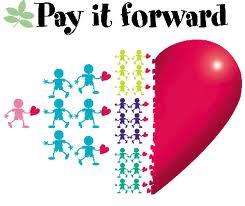
| PSY 2250 -- Personality Theory Pay It Forward Wearing the Pay It Forward bracelet wasn’t that big of a deal to me. Just one more thing to do to get the good grade in the class, I felt like I was just making the motions. As the weeks went by, wearing the bracelet became second nature. I ended up wearing the bracelet all day on Tuesdays and Thursdays, and was very diligent about remembering it. Then one day my husband and I went to the store to pick up our week worth of groceries. While shopping I detoured to the clearance rack to see what kind of deals they had that week. It turned out that they had two cases of cream of chicken soup on clearance for $0.39 a can. I looked through my coupon binder and saw that I had six coupons that would reduce the price of each can to $0.25. I realized that if I were to purchase these two cases of soup it would have little financial burden on us and we would be able to help several people put together some meals. So, we bought the cans, took them to the women’s shelter off of 8th North in Orem, Utah, and I left the bracelet with the attendant. I don’t know if that bracelet will go on to see another owner, but it confirmed for me that doing the right thing and impressing good deeds really is a simple thing to carry out. My Hanging Out Experience Oh how happy I was to see this assignment! It seems very superficial to give an assignment to college students to hang out with their friends, but I am not a traditional college student. I have a full-time job, a full-time family, a small company that I run on the side, and a full-time school schedule. This assignment gave me the permission that I needed to hang out with my two best friends that I hadn’t seen for several months. I called them very quickly after learning about this assignment to set up a girl’s night out. A few nights later we were at a restaurant reverting back to our known and comfortable roles. On a scale of one to five, I would rate that night at a five. It allowed my friends and I to catch up on what we had been doing for the past several months, understand why we were all so busy (sometimes so busy that we can’t even fit in a phone call), and excite each other about the new horizon that we were all in the process of forging. I know that my invasive need to obtain perfect grades, and be involved in many different school functions can be wearing on those people who just want to spend time with me, and it’s important to take some time to explain the significance of what I am doing, so that others can understand where I am coming from. This evening allowed my friends to understand the monumental goals that I am striving toward and gave them a new perspective to enable their understanding and support of me. I don’t know if this hanging out experience will burn itself into my memory or anything like that, but I do know that it meant a lot for my relationship with my friends. My Helping Out Experience This may be morbid to say, but all of the elderly people that I knew or was somehow affiliated with have passed away over the last few years. With that said, I didn’t have any “blue hairs” out in the world to help. So, I thought about all of the people who I knew and decided that my 45 year old aunt would be a prime candidate. She lives alone, in a decent sized house, with a sizable yard, and is an elementary school teacher. She has never been married and has never had children, so when she needs things done around the house she often has to resort to primal begging or hiring out. Unfortunately, because she has taken a life path very different from friends of her past, she doesn’t have many friends that she associates with any longer. It had been several years since I had spent any time with her as well, so I decided that it was time to visit as she doesn’t often get many heartfelt visitors. I called my aunt a couple of weeks in advance to ensure that we could find a mutually acceptable night to get together, I informed her of the project I was working on, and told her that I had really missed her and would like to include her in my assignment. She happily accepted and I told her I would make her a gourmet meal that she would rave about for days! The night of our dinner together, my husband and I packed up all of the ingredients that we would need and headed over to my aunt’s house. We decided to make spinach and tomato pizza with broiled mangos and a warm spinach and bacon salad. For about 20 minutes my aunt allowed us to carry on in the kitchen without her assistance, but her natural busybody temperament came out and she pushed her way in to the mix of things and started slicing and dicing with us. We talked and laughed all night long, reminiscing about things from our past, then we pulled out a board game and played Settlers of Catan for a few hours. Finally, it was pushing midnight, and our body’s screamed at us to go home and go to bed. We cleaned up the dinner mess, packed up our belongings and left her house. The next day she called just to say “thank you.” My Analysis of Pleasure and Gratifications Differentiating between pleasures and gratifications can be very challenging, after all at their roots they are things that make people happy … right? Not all things in life are equal, as it turns out, pleasures and gratifications are very different constructs all together. It is often hard to differentiate between the actions and mentalities that lead to happiness and the impulsive pleasures that may bring a great sense of joy, but wane shortly after the emotion began. Subjective well-being and fun are the major distinctions between pleasures and gratifications. Pleasures, as stated before, are superficial joys that often bring a good amount of temporary happiness. But these joys are not long lasting, and rarely have a significant impact on one’s life, especially in respect to the satisfaction one feels with their life. It’s important to impress that pleasures are incredibly important in the discovery and maintenance of overall happiness, for example, pleasures help one to prevent habituation in day to day life. But, pleasures alone will not allow someone to reach long lasting happiness. Part of telling the difference between pleasures and gratifications is because pleasures can range so greatly in positive intensity. They can range from the subtle joys of watching a fireworks show to the intense highs of a celebratory experience (such as a baby being born). Regardless of how intense or how meaningful such experiences are, the joy and happiness that they bring tend to be quickly fleeting. Gratifications on the other hand are experiences that bring an intense sense of fulfillment and accomplishment. Unlike pleasures, gratifications don’t always bring immediate joy; as a matter of fact sometimes one experiences a sense of drudgery. This must not be misconstrued, even though gratifications require hard work and tenacity they result in the most intense and deeply seeded senses of achievement and satisfaction with life that one can feel. Gratifications can be experienced in a variety of ways, such as graduating from school or helping someone in their time of need. With those examples in mind it is easier to reflect on the hardships of countless sleepless nights to finish a major project, being physically and emotionally drained and yet still being required to fulfill one’s commitment. This is the distinction that gratifications carry, when one accomplishes a gratification, that gratification has a profound effect on their lives. Pleasures and Gratifications In my life I have a plethora of pleasures, and a good amount of gratifications. Interestingly enough, after learning and understanding the difference between the two, I have come to realize the motivations behind the gratification I engage in indeed are for the lasting effects and sense of accomplishment. As I set out to determine what my top five pleasures and top five gratifications are, I really had to reflect on the emotions that I experienced as these different tasks were underway. My top five pleasures include: crafting, playing computer games, eating out at restaurants with various people, visiting family, and watching documentaries. Crafting provides me an outlet to engage my creative juices. I love to create items (especially holiday items) that I can give away to friends and family that provide them with a reminder that I care about their lives. It is an awesome feeling when I visit someone’s house and see one of my craft items taking center stage on the mantle, couch, or kitchen counter. Computer games allow me the opportunity to relax and remove myself from a stressful day. They aren’t outwardly productive, but inwardly they allow me to find my calm, ruminate about my day, or simply go numb when I really need to. The best part of eating out at a restaurant with friends and family is it provides an opportunity to connect without being distracted with cooking or cleaning. It is nice to be able to sit down for an hour or two and just talk until there is nothing left to talk about. This is also why I love visiting family. I am such a busy person that finding time to spend with family is a luxury, so when I am able to find the time, I embrace it. Finally, watching documentaries is by far one of my guilty pleasures. I love to gain the knowledge that they provide, I love to hear the different perspective of researchers, philosophers, and experts, and most of all I love to gain knowledge without having the requisite of a paper at the end. My top five gratifications include: gardening, school, raising my daughter, my marriage, and engaging in activities with my adolescent nieces and nephews. Gardening is one of the most engaging and all-intensive projects I have ever taken on in my life. It is very hard to find the motivation to go out into the garden every day for maintenance, and the back breaking labor that is required makes me question the worth of having a garden. But, when harvest season comes around and we start picking, processing, and eating all of the fruits of our labor I realize how wonderful it is to be able to self-sustain in a world that is so focused on immediate pleasures. School is another aspect that requires a lot of self-discipline and hard work to accomplish. There is very little immediate feedback, and the goals that I am striving toward are very far in the future, but at the end of every semester when I receive my recognition for making the president’s list I remember why I care so deeply about doing well in school. Raising my daughter is one of the most challenging aspects of my life. It takes a consistent effort to do right by her. It’s really easy to get caught up in the responsibilities and commitments of life and forget to plan things around Xylia. But, more recently than ever before I am seeing my efforts pay off as she is learning to read and gaining social skills. I know that the time that I can make for her is priceless in her eyes, even though it can be incredibly strenuous on me. This mentality also extends into my marriage. As with any marriage we have our rocky points, but the efforts that we have put into finding unity and happiness with each other has kept us going for seven years. Finally, spending time with the teenagers in my family is an exhausting and rewarding feat. When I was a teenager, more than anything I really wished that I had a trustworthy adult to talk to and get advice from. So, as my nieces and nephews have started to hit their teenage years I have made a poignant decision to open myself up to these kids as a confidant and advisor. After five years of doing this I have gained an amazingly intrinsic connection with all of my nieces and nephews, and that is the epitome of a gratification. Identifying the Best Gratifications Some of the best examples of gratifications can come from other people. My favorite three examples are as follows: “My mom has been after my sisters and I to help her clean out the shed for probably over a year now. On Tuesday, April 12, 2011 I finally helped her do just that. Was this an activity I particularly enjoyed? Not at first. I will admit I was loathing doing so. I did even attempt (jokingly) to try and get out of it. However, the look on her face told me “not this time!” As my younger sister and I started moving boxes and things out of the shed we quickly began our trip down memory lane. With each box of memories we pulled out we laughed and joked about old times. The afternoon quickly disappeared as we helped our mother clear out space in that old dirty shed. We loaded up the car with things we no longer wanted or needed and filled the trash with broken bits of past. As we made more room in that small little space we shared things with each other we had long forgotten about. But, most importantly we gave our mother our time and helped her out in a way that I know she is truly grateful for. Not for cleaning out the shed, but for getting the chance to spend time with her two youngest daughters, laughing and remembering times of when we were all so much younger. Sometimes, when we do things for others, even when we think it’s about them, we can still enjoy the moment and create truly a gratifying experience for all involved.” --Elyse “My gratification was to spark and old friend’s interest in attending college. He had a difficult time applying himself in high school and barely graduated in 2004. Since then he has become a passionate musician working his way up and is now touring around the country. I was able to catch his interest by researching some of his favorite guitar players and what schools they attended. We discussed hypothetically if he were to go back where he would go and what he would study. His ability to play the guitar would improve tenfold if he was exposed to proper education for it. We even planted a vision of him making the Rolling Stone top 100 guitarists. We researched schools, tuition, and financial aid, even formed a proposal and presented it to his family. I find important and like to discover passion in myself as well as others, and education is an open window fraught with opportunity. Talking with my friend and seeing his passion grow allowed me to reevaluate my own goals, reinforce as well as share my desire and passion to learn. It feels right to pay it forward and pass on the gift of opportunity.” --Dani “My biggest gratification was making blankets to donate to the homeless. I spent four weeks this semester cutting and tying material to create fringe on fifty fleece blankets. I donated these to blankets to Rescue Mission of Salt Lake. The project was very time consuming and a lot of work. When I took them down to the shelter, the volunteers started handing them out to individuals coming for lunch. There was an older woman in a wheelchair who received a bright purple blanket and she looked thrilled. She cuddled it for a moment, wrapped herself up in it, and then waved to me. The experience brought tears to my eyes because I felt that I had made a difference in someone's life and had given something back to my community.” --Jacqueline Reflective Analysis Pleasantly, I have been able to establish a good understanding of what a gratification is and what a pleasure is, and the difference between the two. For me the fundamental difference between the two concepts is the “gut” feeling that one feels after carrying out either a gratification or pleasure. After carrying out a gratification one will have a deep sense of worth and satisfaction. A firm knowledge that the task that they set out to do and completed successfully was worth every ounce of effort they put into it. Pleasures, on the other hand, are something that one tends to crave to do. They will go out of their way to ensure that they have the opportunity to participate in activities that are fun, thrilling, and exciting so that they experience the emotions of exhilarating euphoria, even if it’s just for a few moments. I will openly admit that I probably don’t have as many gratifications as maybe I ought to, however the few I do mean a lot to me. I work endlessly to ensure that I put forth my very best efforts so that I know when my hard labor is over, the rewards truly will pay off. My garden is a great example of this, I spend hours in my garden to ensure that it flourishes so that my family can benefit from the healthy foods and have a thorough understanding of what it truly takes to care for themselves without having to resort to a grocery store to provide sustenance. This means dealing with the sore muscles, calloused hands, sweltering heat, and pesky bugs. But, when all is said and done, and we are sitting down as a family enjoying the produce that we all created together … none of those things matter anymore. I certainly experience my fair share of pleasures, but my gratifications are priceless. Summary Statement This semester has provided me with the information to finally understand why I strive to find major projects and goals to work toward. My natural inclination to help others in need and to impress others to do the same has been reinforced, both by physically doing these things, and also by learning the theories and reasoning behind the motivations. Something as simple as connecting to another human being can have such a great impact on one’s life that it results in being invaluable. By obtaining the purposeful and quality rich information that I have been provided, I will be able to go on with a more thorough understanding of what motivates people’s actions. |
Positive Psychology Reflection Throughout the semester my positive psychology course has required many things out of the class. We have been asked to attend lectures, read research articles and journals, watch research videos, write papers reflective of those research pieces, and take a battery of personality quizzes. The most interesting thing about the personality quizzes are the way that they seem to pull the entire class together in a manner that allows each student to custom tailor the class to their individual perspectives. Within this paper the results of the personality quizzes will be discussed and analyzed, a reflection of my qualities will be given, and an analysis of any personality traits have room for positive change will be assessed. | PSY 2900 -- Positive Psychology Personality Factors I was asked to complete at least 9 quizzes on authentichappiness.com. These quizzes included topics of emotion, engagement, meaning, and life satisfaction. The most important of these quizzes was entitled, “VIA Survey of Character Strengths.” This quiz asked over 200 real to life questions to help the quiz taker identify their most prominent character strengths. Of the 24 identified character strengths I scored highest with fairness, equity, and justice. This falls under the core virtue of justice, “Civic strengths that underlie healthy community life” (In Class Hand Out). Upon reading the descriptions of all the core values, I concur that my strongest characteristic is indeed fairness. With that being said, I must admit that I was shocked I didn’t score higher on self-regulation, under the temperance core value. As a matter of fact, self-regulation was 23rd of the 24 strengths. This came as such a shock to me primarily because every faucet of my life requires a strong sense of self-discipline and regulation. Other quizzes that I took that sparked particular interest for me included: optimism, transgression motivations, approaches to happiness, gratitude, and general happiness. As I pondered putting this reflection piece together I analyzed each of these quizzes to determine if there is a common denominator with all of them. The consensus I came to, was that all of the quizzes that sparked my interest were focused around the satisfaction of my life and the life of the people I associate with. I am not as concerned with life’s subtle nuances as I am with promoting genuine happiness The optimism test surveys how I perceive cause and effect of everyday occurrences in life. I scored a five out of eight on permanent good events and two out of eight on permanent bad events; this means I view good events as a trend that will continue to occur and bad events as a seldom occurring event that will pass in time. I scored a four of eight on pervasiveness of good events and three of eight on pervasiveness of bad events; this means I both believe that good events will enhance my life and bad events occur because of universal or global events. Finally, I scored a four on a range of -16 to +16 on the hopefulness section of this quiz. I was a little surprised about this score because I really do think that I am quite hopeful about the future, though I am pragmatic about how my future will develop, and I am sure that my pragmatic approach in life probably had a lot to do with my score being lower than expected. By pragmatic I mean that I realize both the pros and the cons of all decisions in life, and sometimes realizing the cons of a decision can have a draining effect on uncertain outcomes. It begs to be clarified that I do realize that life is mostly good, and good things occur when hard work is applied to any situation. The transgression motivations questionnaire surveys how I handle conflict and negative incidences in my life. I scored a 22 of 35 on avoidance motivation and a seven of 25 on revenge motivation. These scores make a lot of sense to me, when confronted with anger and conflict I deem it far better to remove myself from the situation as opposed to confronting the issue head on. This relates directly to the fact that I truly want everyone, including myself, to be happy. Conflict, in my mind, is the antithesis of happiness. This is reinforced upon considering my low score in revenge; I very sincerely view revenge as a waste of energy. The approach to happiness questionnaire gauges how I seek and develop happiness in life. I scored a 4.0 of 5.0 on pleasant life, 3.33 of 5.0 on good life, and 4.0 of 5.0 on meaningful life. The pleasant life section gauges how many pleasures one has in their life and how mindful one is in respect to how their pleasures affect their life. The good life section gauges the individual’s understanding of their individual signature strengths and how effectively they mold those strengths around their life. The meaningful life gauges the utilization of the signature strengths to serve something that is greater than the self The gratitude survey gauges my gratitude in life. I scored a 40 of 42 on this quiz. This was not surprising to me at all because gratitude is a fundamental aspect of how I live my life and is a major concept that I try to impress on those around me. It may seem shallow at first but I have gratitude for everything in life, from being able to experience weather changes to a stranger helping me in a time of need. I firmly believe that when I am at the lowest of lows, the best thing I can do for myself is to list off as many things as I can think of that I am grateful for at that moment. This is also an exercise I use with the other people in my life, especially the teenagers. The general happiness quiz gauges exactly what it says, general happiness. I scored a 5.75 of 7.00 on this quiz. I was surprised that I didn’t score higher on this test, because overall I feel quite happy. I am pleased with my current life path, I am happy with the decisions and experiences that have led me to this point in my life, and I intend to keep building on what I have in order to have the best life with the most happiness in the future. Overall the quizzes offered on the Authentic Happiness web site offered some good insight to my life satisfaction. I was already very aware of a lot of the results that the quizzes offered me, but it is always nice to be validated from an outside source. There were a few quizzes that I wish provided me with more detail, such as the meaning of life questionnaire and the general happiness scale, probably because these are two aspects of life that I am currently exploring. I am glad that I was able to quantify some of the information that has been discussed and explored within this positive psychology course. The predominate trait that would be beneficial to change within myself is the avoidance motivation as detailed by transgression motivations. It is not very healthy to cower and hide in the face of aversion, and yet I find that is exactly what I do when confronted with various types of conflict. It isn’t that I am afraid of the conflict; it just seems easier to avoid the situation than to have deal with potential escalations. This is ironic and interesting to me as my job is directly centered around conflict. It is my job to address customer complaints and escalations and diffuse the situation before the potential for economic harm toward my company becomes a reality. This makes me ponder, if I can’t and/or don’t handle conflict in my personal life, how is it I can make a living handling conflict in the public sphere? Upon introspection, it seems that the reasoning behind this is sheer necessity. I neither seek out nor openly accept confrontation in my personal life because it creates hassles that aren’t particularly necessary. This, however, is an ideal, not reality. Real life is messy, harsh, and sometimes brutal. My aversion to conflict does have an impact on my personal relationships in the following ways: 1. making me seem detached from the relationship. 2. Making me seem dispassionate about others and their hardships. 3. Making me feel as though it is acceptable to not take personal interest in the lives of others. Because of these three reasons it seems increasingly important that for the sake of myself and my relationships with others that I begin a change in how I handle conflict in order to enable a higher standard of relationship quality. Further, I believe I may be using avoidance as a defense mechanism. This is a twofold concept, firstly, growing up in an abusive household my natural fight or flight defense has been conditionally set to flight, secondly, avoiding conflict aids me in my ability to hide my emotions. These are both classic symptoms often found in victims of abuse, and I have reached a point in my life where I no longer want to be controlled by the demons of my past. It is time to move forward, and that will not be possible if I don’t begin to learn how to manage all of my emotions, positive and negative. There are a plethora of challenges that I will inevitably face as I pursue the goal of eliminating my avoidance motivation. The most obvious of these challenges is actually facing conflict head on. This will take a very cognitive effort as cognitive responses very easily resurface even when one believes they have eliminated their learned response. The next challenge that I can foresee facing in this change is applying my practical knowledge of the permanence of events. I am an optimistic person, and I tend to easily remember that bad events pass quickly if handled properly. Finally, another challenge that I may face is accepting that some situations are going to escalate no matter how well they are handled. Conflict with others has built in variables, one can never perfectly predict the reactions of others, and I will have to remember to “ride the wave,” that is to say, I will have to handle each conflict I am faced with in a case by case manner. Fortunately, I have learned quite a few techniques in the past few months that will be invaluable through this quest of reforming how I manage conflict. The first tool that I have learned is seeking a better way to cope with conflict is a great gratification; this will lead to a more positive overall well-being. This is multi-faceted as it both allows me to realize my gratitude for others in respect to their views and feelings and it will allow me to acknowledge my own introspective gratitude, most specifically of my ability to show compassion toward others. I also will be able to find greater momentary and situational happiness by developing my ability and skills in forgiveness. While momentary happiness is not as important as subjective well-being, it is still a refreshing reset when life becomes challenging or mundane. Seeking the Good Life My idea of a good life surrounds the notion of compassion. When one is able to have altruistic compassion for others, momentary selfish pursuits no longer seem to have a great effect on the individual life. I hope to arrive at a point in my life where I truly can understand life from the perspective of others, and can also convey my wisdom to others. World peace is a naïve notion, but, what a wonderful ideal to strive toward. In my mind, the best way to strive toward world peace truly begins at the individual level. Compassion opens doors that some people can’t even imagine exist. The first time I experienced the surreal feelings surrounding the genuine compassion directed toward someone else was the most fulfilling and all-encompassing emotion I had ever felt up to that point in my life. I was 12 years old and our town had experienced a microburst, that is Gail force winds that surge to speeds above 120mph. This particular event knocked trees on houses, destroyed roads, and knocked out power lines that took days to repair. As my family walked around the neighborhood ensuring that all of the other families in the area were safe, we committed our services and manpower to a variety of different families in need. For a solid week from sun-up to sun-down we traveled from neighbor to neighbor cleaning up debris, repairing roofs, and cooking meals for those who otherwise had no means to create a warm meal. Life at its most raw moment was so satisfying, it offered an opportunity to know that I, personally, had the power to make a difference in someone else’s life. This is my definition of the good life, being able, willing, and excited to be able to help another person overcome their adversities and alleviate their feelings of helplessness. Besides being an all-encompassing philosophy, compassion opens the door for personal growth. Personal growth is the individual effort to better one’s self. As one grows as a person they begin to develop their humanity, the aspect of life that sets us apart from other animals. Growth is the ability to learn from mistakes and turn those mistakes into tools to make a better life for the self and others. If one can allow themself to grow and prosper, then one can allow themself a better life. I know that I will continue to grow and learn for the rest of my life. I know I will never be perfect, but that doesn’t stop me from striving to achieve my ideal life, that is one of the most fundamental purposes of life, in my opinion. I know as I grow and gain wisdom through my life, I will be able to project that knowledge on others and help enable those around me to have as satisfying life as I am able to. All in all, we live in one world with other people who feel, think, and act, and if we can all grow and develop together, that is the epitome of a good life Authentic Happiness. 2006. 20 February 2011 http://www.authentichappiness.com. In Class Hand Out. "The VIA Classification of Character Strengths." www.VIAInstitute.org. 23 October 2008. |

| FILM 1070 -- Film and Culture Single Mothers in Film For decades women have been depicted in film in a variety of roles. From the strong willed hero to the helpless victim. One aspect of women in film that is of special intrigue is the real life issues of single motherhood. There are many movies that depict single mothers rather unfavorably (such as Precious’ welfare mother in “Precious”) and there are other films that show how powerful single mothers can be (such as Novalee in “Where the Heart is”). The reality of single motherhood is extremely dynamic and incredibly hard to stereotype as one way or another. Within this paper the films Where the Heart Is, Waitress, Riding in Cars with Boys, and Precious will be compared and contrasted in respect to their depiction of single mothers. One of the most outstanding aspects of the depiction of single mothers is how these women acquired their roles. Within all of the films in this paper the mothers were pushed into single motherhood because of a deficiency on the father’s behalf. For example: Where the Heart is: the father is selfish (probably narcissistic) and develops an alcohol dependency. Waitress: the father is emotionally abusive and has significant co-dependency issues. Riding in Cars with Boys: the father was an alcoholic, drug addict who was neglectful and selfish. Precious: the father is her father; she is raped by her father and impregnated. This is especially interesting to consider because it implies that even though the women made the decision to raise their children alone, the real decision was made for them by the weak men they were attracted to and the needs of their children. Thus instead of emphasizing the power of a single mother, it shows them more as a struggling victim. This, as a side note, also has the potential of highlighting or stereotyping single fathers, and may impact the labels that single fathers have to fight to shed. Another similarity in these four movies is the underlying message of the films. That is the necessity and importance of raising children in the most positive environment possible despite the struggles one may come across. In Where the Heart is Novalee is motivated to better her life simply because she has Americus (her daughter). Jenna, in Waitress, slowly develops a bond with her child as she was able to differentiate her baby from her abusive husband, and this motivates her to leave the damaging relationship in order to build a prosperous life for her and her daughter. Beverly, in Riding in Cars with Boys, detailed the lifelong development of how a career motivated mother is able to juggle her talents and skills with her son. “Precious” depicts Precious as a loving and compassionate mother who instinctively desires something better for her children than she had as a child even though her children were conceived under horrible circumstances. These depictions really are a double edge sword. In one respect women are given an image of strength and resiliency and in another respect the depictions imply that it is bad that women resent their children or experience any emotion that is not naively happy in relation to their children. The translation of this into the “real world” is that upstanding single mothers ought not have rough or negative raw emotions. This is a sorrowful disservice in altering the established stereotypes and stressors of single mothers. It allows a social presumption that unconditional love is innate, when in reality, this isn’t always the case. There are some significant differences between these films that are important to consider as well. One of these points is the manner in which the children of the single mothers are treated. For example: Where the Heart is: the child is the love and joy of the mother’s heart. Waitress: the child is doted on littered in affection and attention. Riding in Cars with Boys: the child is perceived as a nuisance, but despite this the mother develops an almost unhealthy dependence with him. Precious: While Precious is despised by her mother and abused and degraded. Precious treats her children with altruistic love and makes significant efforts to better her life in order to give her children a chance at a pleasant life. Within these examples there are clear distinctions between common stereotypes and efforts to change the stereotypes (specifically that single mothers are unstable vs. single mothers are especially effective mothers). Another difference that these movies depict is the different coping styles with the added stressors that come with single motherhood. In Where the Heart is Novalee adopts superstitions with the number 5. This is a common coping mechanism when stress and control with one’s life seem unbearable. In Waitress Jenna detaches herself from the unborn child as a defense mechanism against more pain and displeasure with her life. After the child is born however, she has a reality check and makes positive changes in her life surrounding her daughter’s well-being. In Riding in Cars with Boys Beverly deflects her stress onto her son, unfortunately, causing her son to carry large amounts of stress throughout his life. In the face of increasing stresses, Precious sheds her victim role and adopts a role of empowerment. She makes significant and poignant efforts to make positive change in her life. The reason these four movies were chosen for this paper was to show the varying degrees to which single mothers are depicted in film. On one side of the spectrum we see a mother who is instinctually connected to her baby and almost effortlessly makes reflective changes, on the other side of the spectrum we see a mother who is violent, resentful, and abusive and has little regard for the impact she has on her child. This is important to observe because the most negative stereotypes dwell on the sadistic and selfish motives that some mothers express. There is little regard for the hardships and stresses that single mothers face, and even when introduced with a mother who handles the cards life dealt her with grace and altruism, it is implied that this is how a mother should handle being a single parent. It would be presumptive to assert right from wrong in respect to the depiction of single mothers, but one thing stands out, it shouldn’t be assumed that all single mothers are abusive, nor should it be assumed that single mothers ought not have human emotion in regards to their children.
|

