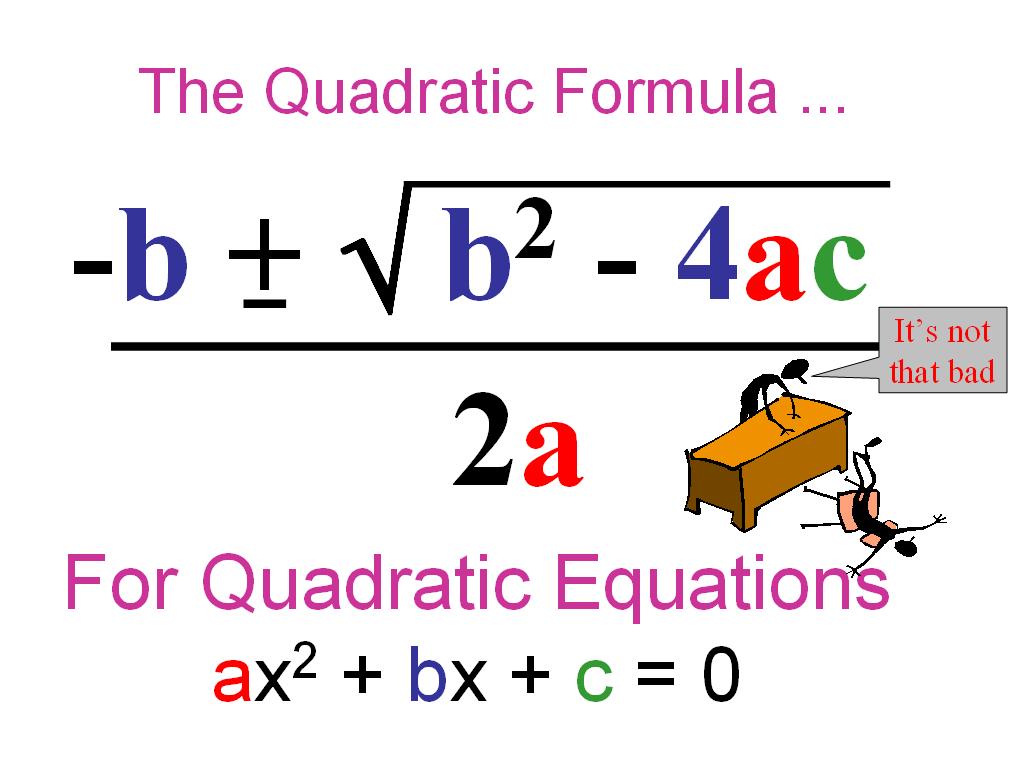
 | Math 1010 -- Intermediate Algebra Click on the project above to explore the depths to which math can take you. This math class required two projects to be completed in order to apply our mathmatical knowledge to real world applications.
|


| Comm 1270 -- Analysis of Argument What if I told you that I could give you the secret to cutting adolescent suicide by two to nine times its current rate? What would you be willing to do if I gave you the secret to preventing school shootings? What would you do for the secret to increasing your child’s academic success? School bullying is the leading preventable factor in adolescent suicide, school shootings, and high school drop out rate (Bullying Statistics). By reducing the occurrence of school bullying we would be able to prevent countless numbers of suicide, school violence, and high school drop outs. Within this paper I will explain why more people need to be proactive about ending school bullying. The severity of school bullying is escalating. According to a study done by ABC news, 27% of students are the victims of bullies (Dorning, 2010). In a study of 207 junior high and high school students, 88% reported having observed bullying and 77% reported having been a victim of bullying. Another study of 6,500 students, 25% reported having been bullied regularly in the last 3 months with 10% being bullied at least once a week. Furthermore, with the increasing usage of the internet, bullying is extending far past the school ground and presents itself as cyber-bullying (Bullying Among Children ). The emotional turmoil that is experienced by the victim is significant and long lasting. According to the CDC, suicide is the third leading cause of death among young people. For every suicide there are at least 100 suicide attempts, and 7% of high school students have attempted suicide (Youth Suicide). According to five studies compiled by researchers at Yale University, bullying victims are two to nine times more likely to report suicidal thoughts than other children. Further, the bullies themselves also have an increased risk for suicidal behaviors (Bullying-Suicide Link). One study in Britain found of the 59 reported cases of child suicide, 26 were definitely connected to bullying (Dickinson, 2010). At Mentor High School in Ohio, officials have confirmed that one girl and three boys have killed themselves in recent months. According to Janet Klee, a school counselor, the suicides were connected to bullying. As a result of the suicides, the parents of one of the suicide victims are currently suing the school for failing to protect their child. Further, other parents have begun to withdraw their children from that school because of the bullying rate and the correlated suicides (Teens Commit Suicide). School bullying effects the quality of education for both the bully and the victim. An anonymous post on experienceproject.com stated, “I quit school two weeks later because the girls had of course blabbed about how I was all dressed up & looking forward to a date.” This blog post was remarking on the after effects of a cruel joke a group of bullies had played on her in high school. An important step in reducing the ramifications of bullying is to have the schools step in to prevent and resolve bullying before it becomes a chronic problem. According to a study done by the University of Virginia, the best way for a school to reduce it’s bullying rate is by being strict, being supportive, or both. A school who is strict and supportive in relation to school bullying is in the 27th to 38th percentile for occurrence. A school who is only strict or only supportive in relation to school bullying is in the 50th to 57th percentile for occurrence. While a school who is neither strict nor supportive in relation to bullying is n the 60th to 66th percentile for occurrence (Be Strict or Be Supportive). The effect of intervention and support services are dramatic in the school system, and these efforts need to be supported by the public. As of 2003, 15 states have passed laws addressing bullying in schools, and many other states have considered passing legislation. It is incredibly important that parents, school officials, and the public take a stand against school bullying. The public must get behind the pending legislations to make movements in ending bullying, and preventing nonsensical pain and torment. "Youth Suicide", Centers for Disease Control and Prevention, Suicide Prevention. 29 Nov. 2010 http://www.cdc.gov/violenceprevention/pdf/Suicide-DataSheet-a.pdf "Bullying and Suicide - Bullying Statistics." Bullying Statistics - Teen Violence, Anger, Bullying, Treatment Options. Web. 25 Nov. 2010. http://www.bullyingstatistics.org/content/bullying-and-suicide.html Dorning, Ann-marie. "Anti-Bullying Efforts Gain in Mass. - ABC News." ABCNews.com - ABCNews.com: Breaking News, Politics, World News, Good Morning America, Exclusive Interviews - ABC News. Web. 29 Nov. 2010. http://abcnews.go.com/WN/anti-bullying-efforts-gain-mass/story?id=9103058 "Bullying Among Children and Youth." Office of Juvenile Justice and Delinquency Prevention. Web. 29 Nov. 2010. http://www.ojjdp.gov/jjbulletin/9804/bullying2.html "Bullying-Suicide Link Explored in New Study by Researchers at Yale." Yale University News. Web. 29 Nov. 2010. http://opac.yale.edu/news/article.aspx?id=5913 Dickinson, Matt. "Research Finds Bullying Link to Child Suicides - Home News, UK - The Independent." The Independent | News | UK and Worldwide News | Newspaper. Web. 24 Nov. 2010. http://www.independent.co.uk/news/uk/home-news/research-finds-bullying-link-to-child-suicides-1999349.html "Teen Commits Suicide Due to Bullying: Parents Sue School for Son's Death - ABC News." ABCNews.com - ABCNews.com: Breaking News, Politics, World News, Good Morning America, Exclusive Interviews - ABC News. Web. 29 Nov. 2010 http://abcnews.go.com/Health/MindMoodNews/story?id=7228335 “Be Strict or Be Supportive” Virginia Youth Violence Project. Web. 26 Nov. 2010 http://youthviolence.edschool.virginia.edu/high_school_safety/pdf/vhss-one-pager-issue-1.pdf |


| Sociology 1020 -- Social Problems Rich Dad Poor Dad The book Rich Dad Poor Dad is an advice book about aligning your mindset of money in a way that optimizes income. The book is about a man, Robert Kiyosaki, who made financial decisions from the advice of the two most influential men in his life, his “rich dad” and his educated but “poor dad”. The point of the book is to influence the reader that while you need to be well educated, you also must be smart. By this he means that you must be willing to take smart risks in order to obtain wealth, not just obtain and education to work for money. This book provides a new way of thinking about personal finances and personal investments. The book begins by introducing the reader to the influential people in the author’s life. He explains that his biological father influenced him to obtain an education to give him security in life. His surrogate father on the other had influenced him to use his education to give him wealth in his life. He also accounted that these influential people began teaching him everything from a very early age. The next point that the author expands into is that the rich don’t work for money, money works for them. By this he details that one must change their mindset about why they work. It is not enough to punch in and punch out of work everyday to obtain a paycheck. One must use those paychecks to turn them into even more money. That way that hard earned work can see returns on itself many times over. He also expresses that it is not enough to blindly throw money at an investment or in the stock market. It is stated many times over that in order to properly make investments, one must understand exactly what their money will be doing while in the investment. The next point is that one must be fully aware of what their money is doing, and exactly what the investments are doing. The author called this, minding your own business. By this he explains that once you have invested in a venture you must never let your attention leave that venture. Further, just because you are in one type of investment, that doesn’t mean that you sit idly by waiting for a return. It is vital that more opportunities be sought after and acted upon. Money should be in a constant state of movement, when one investment begins to slow the active concentration should be moved to other ventures. The next point is that the rich find ways of making money by inventing new avenues and creating laws to protect the assets that they are already in possession of. He explains that if taxes become to steep the rich create new tax loop holes and utilize them. If they are earning too large of an income, they create a new corporation to protect earnings. The rich pay themselves first and uncle Sam last. The last lesson that the author exclaims is that one must work to learn. Every moment in every person’s life is an opportunity to learn, and that opportunity should be taken advantage of. Work should be an avenue to learn, not to earn money. Finally, the book concludes that the five most common obstacles must be overcome in order to reach optimal earning potential. Fear prevents people from investing in opportunities when they knock. Cynicism causes people to over react when the market moves into a slump. Acting irrationally in any situation, but especially with money, will provide poor results. It goes without saying that lazy people don’t get rich. In order to be an active investor, one must be energetic and proactive in finding opportunity. While habits create comfort, one must assess whether their habits are helping or hurting their financial situation and make adjustments where necessary. The last piece of advice he gives is don’t be arrogant. Arrogance is ego plus ignorance therefore the arrogant person would be to proud to admit they are ill-equipped to handle a financial situation they are in. By addressing and adjusting the afore mentioned traits, anyone is capable of obtaining a better financial situation. The book definitely plays devil’s advocate to conservative fiscal theory. On the one hand it promotes self-reliance and responsibility, on the other hand it portrays that financial success can be obtained by anyone who puts out the effort. With that said, the tactics and strategies provided in this book are only useful to those in the working class or higher. This again leaves those experiencing poverty in the dust, as with most conservative practices. The whole premise around changing one’s mindset about wealth really hit home with me. I had already been building a personal financial theory similar to the one presented in this book, and the book concreted a lot of those views. For example, the notion that one must constantly be looking for new and undiscovered investment opportunities, creativity is key to investments. I am always on the look out for new and unique investments, and those investments typically do quite well for me. It definitely provided the reinforcements that I needed to avoid the “popular” investing strategies and continue being a trail blazer. The book was very well organized, however, it was generic. I could tell that it was written for the masses, and for an introductory book, that is acceptable. However, I do look forward to reading more books from this author, I enjoy the wisdom that he brings and respect the view points that he expresses. I have an innate interest in finances to begin with, and have since I was young, so, I was able to relate to this book very easily. I have actually bought a copy for my brother and mother in hopes that they will take as keen an interest in it as I did. I would recommend this book to anyone who has an interest in developing their philosophy around personal finance. |

Abstract This paper analyzes academic success and the factors that effect the out come. Academic success is not a easy accomplishment, there is an array of road blocks that present through a child’s academic career. By pinpointing the challenges that must be over come and the advantages that bring success with greater ease, one will be better prepared to arrange behaviors and lifestyles to accommodate. In an effort to gain a better understanding surrounding academic success, I used a combination of five prevalent studies and integrated their research work. By utilizing these five studies I was able to arrive at the conclusion that family income, family size, family type, and the relationship between the parents will have a drastic and long lasting effect on the children. Most significantly, in comparing a child with more of risk factors to a child with few risk factors, it is far more likely for the prior versus the latter to fail in their academic career.
| Sociology 2600 -- Marriage and The importance of education in our society is far reaching and significant. There are few things that impact the lives of the members in our society as one’s education level. Incidentally, education is one variable in relation to social status that is in the control of the individual, and also impacted so greatly by societal norms and laws. Within this paper we will analyze the factors surrounding the academic challenges and successes that first born children face. Academic success is not a unilateral concept, there are many factors that contribute to the dynamics in academia, and any one of the factors will impact the outcome of a child’s academic career. Some of the major factors that will be considered are socioeconomic status, family size, and marital status of the student’s parents. Understanding these prevalent variables and how they effect academic success will allow for better understanding in regards to the impact that these variables will have on the individual child. Socioeconomic status (SES) is a position within a hierarchical social structure that is determined by a combination of variables, including occupation, education, income, wealth, and place of residence (Dictionary.com, 2010). The SES of a family directly impacts the academic success of children, this is because it either provides or removes advantages from a particular social class. A family with low SES, as compared to families with a high SES, lack financial, social, and educational support. Poor families may have limited access to community resources that help prepare children for school. Further, parents are all too often ill-educated and are thereby ill-prepared to assist their children in their schooling. Another challenge that families with a low SES face is poor health, often due to lack of nutrition and immunizations. Children who are not healthy will have a much harder time applying themselves and absorbing the information that they are being introduced to resulting in less information retention as they progress through school (Socioeconomic Status, 2010). The opposite is true for high SES families. This is increasingly important to understand in relation to first born children as they are often asked or forced to make choices and sacrifices in respect to the welfare of the family. This can be observed when a child is asked to take on a part time job to increase familial income. Or in an attempt to boost social mage for themselves or their family a child is required to join a team or association within their school. The next factor analyzed in relation to first born academic success is family size. The role that family size plays in first born academic success is multi-dimensional. Firstly, the larger the family the further that family’s resources must stretch in order to meet the basic needs of it’s family members. Large families with a low-SES will see a much more significant impact than large families with a high-SES. Secondly, parental resources, such as focused attention and time, are dramatically reduced as family size increases (Downey, 1995). In considering parental involvement, children are required to be far more self-sufficient and self-motivated with their schooling when part of a larger family as compared to smaller families. This further perpetuates as family size grows, as the eldest child is often required to offer more of their time to aid their younger siblings, even though they are receiving less attention and assistance to begin with. On the converse, smaller family size reduces the afore mentioned issues, and it is often found that only children regularly receive more assistance in their education than their multiple child peers (Newman, 2001). All things being considered, there is still considerable evidence that first born children do carry the advantage in academic success. Lillian Belmont and Francis Marolla (1973) published, Family Size, Birth Order and Intelligence Test. Their findings stated that within each family size, the firstborns always scored better on the Raven test than did later born children. The study explains that first born children may have the advantage because they had more access to one on one attention from their parents early in their school years than did later born children. Finally, one must consider the implications of the parent’s marital status and weigh the impact that this has on a first born child’s academic success. According to Sally Banks Zakariya (as cited in Jeynes, 2002) children in one-parent homes showed lower academic achievement rates in school than children in two-parent homes. Interestingly, the measure of academic success of children in blended families was in-between the successes of one-parent and two-parent homes. Within households comprised of divorced parents, there is a significant impact on how parents carry on their relationships (with each other and the child) and responsibilities post-dissolution. According to one compilation of 63 studies: in households which children’s fathers pay child support, those children showed a far more positive effect than children whose fathers don’t contribute financially in their upbringing (Amato & Gilbreth, 1999). When divorced couples carry on a sociable and friendly relationship in respect for their children it helps create a feeling of unanimity for the children and the parents. By both parents taking fiscal responsibility for the children’s welfare, financial stress and burden is reduced. This offers a more fluidly functioning home life for the children and also prevents feelings of hostility from arising by either the parent or the child. In conclusion, this paper has analyzed the challenges that first born children face, and where their challenges and successes stem from in relation to academia. It is important to recognize that academic success is not a simple task, there are many components and challenges that must be faced and confronted in an effort to overcome hardship, in order to arrive at a successful outcome. Family income and social standing can pose roadblocks for a child, but with persistence these challenges can be overcome. Family size has a significant impact on a child’s success from being the oldest in a multi-child family, to being the only child in a family. Finally, it has been shown that a child’s parent’s marital status and how they relate with one another can also have a significant impact on the success that a child experiences in their education. This analysis should allow for better understanding on the complex dynamics that are involved in the academic success of first born children. References: Socioeconomic Status | Define Socioeconomic Status at Dictionary.com. Dictionary.com | Find the Meanings and Definitions of Words at Dictionary.com. 13 Nov. 2010. Socioeconomic Status. http://www.ncrel.org/sdrs/areas/issues/students/earlycld/ea7lk5.htm. 13 Nov. 2010. Downey, D. B. . When Bigger Is Not Better: Family Size, Parental Resources, and Children's Educational Performance. American Sociological Review, Vol. 60, No. 5. 1995. 746-761. Newman, S. Parenting an Only Child: the Joys and Challenges of Raising Your One and Only. New York: Broadway, 2001. 36-37.
Jeynes, W. Divorce, Family Structure, and the Academic Success of Children. New York: Haworth, 2002. 5. Amato, P.R., & Gilbreth, J.G. Nonresident Fathers and Children’s Well-Being: A Meta-Analysis. JSTOR, NCFR, Vol. 61, No. 3, 1999. 557-573. |

| PSY 2300 -- Abnormal Psychology Within this paper I will provide a synopsis of the movie Girl Interrupted directed by James Mangold, provide a diagnosis based on the criteria exhibited within the movie for Susanna Kaysen. Girl Interrupted is based on a book with the same title that is a memoir about the author Susanna Kaysen. The movie does a very good job depicting a variety of mental disorders, the character that this paper will highlight and examine is of significant intrigue as she has a broad range of disorders. Synopsis After overdosing on aspirin, Susanna Kaysen, at the recommendation of her doctor, is driven to the Claymoore Psychiatric Hospital and checked herself into their care. Despite the fact that she voluntarily admitted herself into the psychiatric hospital she adamantly denied that she had any serious emotional problems nor that she had any actual intention to commit suicide. While in treatment Susanna begins a path of self-discovery and begins to establish her place within society. While developing these attributes Susanna begins to befriend many of the patients on the psych ward ranging from the attending registered nurse, Valarie, to the emotionally unstable, Daisy, to the mentally deranged, Lisa. Susanna becomes increasingly fond of Lisa because of the attention she brings to herself. The first interaction between Susanna and Lisa was volatile, with Lisa wanting to know where her best friend went, and why there was a new girl in her place. With Susanna and Lisa as the ring leaders, a small group of patients began to form a clique of sorts. As Susanna and Lisa’s relationship evolved, they began to cause havoc and chaos through the hospital. Lisa begins to take a controlling interest to Susanna. During an outing for ice-cream, Susanna is confronted by the wife of a man that she had had an illicit affair with. As the woman belittles and verbally assaults Susanna for her actions, Lisa becomes quite territorial and lashes out at the woman, causing all of the other hospital patients in attendance to start acting impulsively as well, resulting in an over the top and embarrassing scene. This action resulted in disciplinary action for Lisa, and she was banned from going outside of the hospital. As the weeks go on, Susanna begins to establish her new routines. Her ex-boyfriend, Tobias, came to the hospital to visit her. It had just been announced that he was about to be drafted into the army during the Vietnam war and because of this he was intending to flee to Canada. Susanna and Tobias engaged in some sexual acts, got caught, and were asked to go outside. As Susanna and Tobias were outside, he asked her if she would leave the hospital and go with him. Despite the fact that they had just had an intimate moment, Susanna denied his request and told him that she didn’t actually want to be with him. All the while Polly was watching the unfolding of this romance and became increasingly distressed at her own disfigurement because she had lit herself on fire. That same night Polly had a breakdown, sobbing uncontrollably, and was placed in solitary confinement. Concerned for Polly, Lisa and Susanna drugged a nurse on night duty, stole a guitar out of the art room, and proceeded to sing to Polly in an effort to calm her down. As they were singing an orderly came to the ward to try to figure out where all of the noise was coming from and to stop it. Susanna pleaded with the orderly to allow them to keep singing and not report them, and in the process started using seductive tactics. The orderly and Susanna embraced through the night only to be caught in the morning by Valarie, who reported the incident to Susanna’s therapist. Susanna was called into the head psychiatrist’s office as a result of the incident to receive an evaluation. As the head psychiatrist, Dr. Wick, questioned Susanna on her actions, she points out why her actions the night before were out of line. Even though Susanna adamantly refused to acknowledge that her actions were out of line, or that she is promiscuous, Dr. Wick pointed out the err in her thinking. Having sexual relations with her ex-boyfriend and immediately following that with another sexual act with an orderly was considered promiscuous. From that point forward Dr. Wick takes on Susanna as her patient completely. After returning from the therapist’s office, Susanna finds out that Lisa was moved to a different ward, in an attempt by the hospital to separate them. This development pushes Susanna into a depression. Frustrated and concerned, Valarie carries Susanna to the bathroom and drops her in a cold bath. Valarie explains that Susanna is adopting the role of “mentally-ill patient” and it is ludicrous for her to do so. As a rebuttal to this, Susanna begins to verbally attack Valarie, even though they had had a very respectful relationship all this time. In defiance and impulsivity, Suzanna and Lisa escaped from the hospital, hitchhiked a ride with the intention of making their way to Florida to become performers at the newly built Disneyworld. Along their way they attended a party, where Lisa stole the wallet of a man who she had seduced. They fled the party and made their way to, former hospital patient, Daisy’s house. Once safely in Daisy’s home, Lisa begins to antagonize Daisy making claims that she was, in fact, not cured. Lisa pointed out that she was cutting herself, accused her and her dad of having an incestuous relationship, and that her eating disorder was still out of control. As a result of the brutal verbal abuse inflicted by Lisa, Daisy hung herself the next morning. When Susanna found her body, she broke down sobbing, while Lisa indifferent to the situation said, “what an idiot,” and denied any responsibility for her death. Rather, she deflected that Daisy was just waiting for an excuse to kill herself. Lisa then took all of the money that Daisy had in her pocket, told Suzanna that it was time to leave, and fled the house. Suzanna, on the other hand, refused to go, called the authorities, and went back to the hospital distraught. With this life altering experience behind her, Suzanna began to make substantial progress in determining the root of her problems, and trying to find the means to heal herself. Her progress was significant and steady with the absence of Lisa. However, sometime later, Lisa was caught and brought back to the hospital. Upon learning that Suzanna was going to be released, Lisa began to lash out. On Suzanna’s last night, Lisa stole her diary, assembled a group of patients, and went down to the basement to divulge the information in the diary to the group. When Suzanna confronted Lisa about this, they get into a climatic argument and Suzanna informed Lisa that she was a shell of a person, already dead, and no one really cares about her. This causes Lisa to crumble and she suffers a nervous breakdown. The next morning, as Suzanna is preparing to leave the hospital, she stopped to visit Lisa. She told Lisa that she was not really a lost cause, and that she wanted her to get better and that Lisa should come visit her. At conclusion, Suzanna reports that by the 1970’s most of the patients had been released from the hospital. She had maintained contact with some, and she never saw some of them again. Diagnosis Suzanna will be diagnosed at admittance to the hospital. This will provide perspective to her most severe period, thus reveling why inpatient psychiatric help was needed. Suzanna Kaysen: AXIS I Code: 296.89 *primary; 305.1; 305.00; V61.20 Bipolar II Disorder (Recurrent Major Depressive Episodes with Hypomanic Episodes) *PRIMARY, Depressed, Severe with psychotic features, recurrent without interepisode recovery, superimposed on Dysthymic disorder; Nicotine dependence with physical dependence; Alcohol abuse; Parent-child relational problem. AXIS II Code: 799.9 Disgnosis Deferred on Axis II (Dependent personality disorder) AXIS III None reported AXIS IV Problems with primary support group, occupational problems AXIS V GAF (current): 17 Susanna’s original diagnosis was borderline personality disorder with a depressive reaction. I found that this diagnosis was inaccurate based on the information within the film. I diagnosed Susanna with bipolar II disorder, recurrent major depressive episodes with hypomanic episodes, depressed, severe with psychotic features, recurrent without interepisode recovery, superimposed on Dysthymic disorder as primary. There has been a presence of one or more major depressive episodes, there has been a presence of a hypomanic episode but not a manic episode, the mood symptoms are not better accounted for in psychotic disorders, and the symptoms that have presented have had a significant distress or impairment in her life. For example, Susanna has expressed that she has been feeling sad, empty, hopeless, and had been experiencing significant suicidal ideation that resulted in a suicide attempt. The difference in Susanna’s elevated moods that makes them hypomanic versus manic is a combination of severity and time. Her elevated moods last four days or less, she has an inflated self-esteem, she becomes more talkative during these periods which presents her flight of ideas, she is easily distracted and has an excessive involvement in activities that provide a high potential for negative consequences (such as an illicit affair). Again, I reiterate that because the extent of her actions go out of control but not extreme and because the moments last no longer than four days at a time, she meets criteria for hypomanic episodes, and thus bipolar II. The most recent episode that Susanna exhibited was depressed, this is evident through her expression of sadness and emptiness and her suicide attempt. The current clinical status of severe with psychotic features is evident through her explanation that she has been hearing things, and seeing things that aren’t real. Again, it is designated severe because she has placed herself in harms way by attempting suicide. Finally, the longitudinal course specifier of recurrent without full interposed recovery, super imposed on dysthymic disorder is apparent because her symptoms were present for over one year, which is the minimum amount of time for an adolescent (onset of her symptoms was before she was 18). Susanna showed evidence of both nicotine dependence with a physical dependence when she would chain smoke or go out of her way to smoke a cigarette. Alcohol abuse was apparent at parties when she would consume multiple drinks, and her drinking a bottle of vodka immediately before she attempted suicide (binge drinking). The Parent-child relational problem was important to highlight on Axis I because the problems stemming from this have a direct correlation between her developing personality disorder and exacerbating her actions around other disorders such as depressed mood. Susanna’s mother was very overbearing, over protective, and didn’t communicate effectively with her. Susanna’s father was detached, uncommunicative, and disconnected. Seemingly, with both parenting styles impacting her and mesh that with her mood disorder, Susanna was developing dependent personality disorder. The deferred diagnosis of dependent personality disorder is based on her need to be cared for, her gravitation to dominate personalities, and the fear and distress exhibited when separation is experienced. She was becoming increasingly dependent on other people to make decisions for her and clung to the advice and reassurance of others. She refused to assume responsibility for major choices in her life (such as her educational pursuits). She had a difficult time expressing disagreement with those that she held as a dominate figure in her life (such as when Lisa would verbally and physically batter other patients in the hospital) and would go to excessive lengths to obtain support from others (take for instance Lisa and Susanna breaking out of the hospital with no plans and little direction). It was apparent that she had a very hard time initiating projects and plans and felt very helpless when alone. Interestingly, she immediately gravitated and clung to Lisa, who had narcissistic personality and anti-social personality disorder, once admitted to the hospital as this was an effort to replace her parents in her dependency. As stated before her psychosocial and environmental problems were problems with primary support group (ie. Overprotective mother) and occupational problems (ie. Unemployment). These problems cause a sense of anomie within Susanna, leaving her ever more vulnerable to the depressive symptoms she was experiencing. Finally, Susanna was given a GAF score of 17 due to her suicide attempt with no real expectation of death, hypomanic actions, delusions, and increasing dependency. With all of the symptoms and diagnostic criteria that Susanna exhibited through the movie, it is apparent that she is a dynamic and interesting character. Although the portrayal of Susanna based on the movie’s diagnosis was inaccurate, the depiction of the newly modified diagnosis was very accurate and provided a good example of the disorders present. There was a lot of detail provided for the emotional aspects of each disorder and the movie provided a lot of detail to the social stressors that can exacerbate budding disorders. |

